Bliro is an AI sales assistant for sales teams in the DACH region that documents customer conversations online and on site in real time, automatically summarizes them and writes insights directly into CRM (Customer Relationship Management). AI-based conversation documentation (conversation intelligence) solves the biggest time problem in B2B field sales: manual follow-up of customer appointments. This article explains why classic documentation slows down sales teams, how AI-based alternatives work, and what you need to pay attention to when it comes to data protection and GDPR.
Why manual conversation documentation slows down sales teams
Salespeople only spend 29 percent of their working time actively selling. The remaining 71 percent is lost for admin tasks, data entry, and meeting preparation, such as Salesforce State of Sales Report 2024 shows. In a 40-hour week, that's around 21 hours that don't take place directly at the customer's premises.
The problem is particularly acute in the B2B sales force. Each on-site appointment is followed by 15 to 30 minutes of rework: sort meeting notes, update CRM fields, formulate follow-ups. Anyone who has four to five customer appointments a day loses several hours simply due to documentation. One Forrester analysis Put the average admin workload of Sales Reps at 14 hours per week.
CRM maintenance is particularly affected by time pressure. Loud Tech.co 32 percent of salespeople spend more than an hour a day manually entering CRM data. The average CRM adoption rate across industries is just 26 percent. 43 percent of CRM users use less than half of the available features.
The result for sales managers in B2B SMEs: Decisions are made based on incomplete data. Customer knowledge gained during the conversation stays in the head of the sales representative instead of in the CRM system. Sales forecasts become inaccurate, deal risks invisible. One CRM.org survey shows at the same time: 94 percent of companies report an increase in productivity following consistent CRM use. The problem is not the CRM, but the manual effort required to fill it.
What is AI-supported conversation documentation?
AI-powered conversation documentation (English: Conversation Intelligence) is a technology that automatically converts customer conversations into structured notes, summaries, and CRM data sets. In contrast to simple transcription tools, Conversation Intelligence not only creates word logs, but also extracts actionable information: customer needs, next steps, open questions and deal-relevant signals.
The global market for conversation intelligence software is getting loud Future Market Insights estimated at 25.3 billion USD (2025) and is expected to grow to 55.7 billion USD by 2035. In Germany, according to the Bitkom study 2025 36 percent of companies already have AI applications in everyday work.
Conversation intelligence in B2B sales typically comprises three core functions: real-time transcription (live transcription), automatic summary (AI-generated call notes) and CRM synchronization (automatic data transfer to CRM). Advanced platforms such as Bliro complement this basis with sales coaching, meeting preparation and voice-based assistance functions.
In the DACH region, the introduction of conversation intelligence faces an additional challenge: 53 percent of German companies complain about legal ambiguities regarding the use of AI, according to the Bitkom study. This explains why many sales organizations are reluctant despite proven productivity gains. One Outreach study shows the effect at the same time: Sales employees with conversation intelligence support make follow-up appointments 36 percent more often than colleagues without AI support.
Real-time transcription is the technical foundation of every conversation intelligence platform. Under optimal conditions, modern ASR systems (Automatic Speech Recognition) achieve a word error rate of less than 5 percent and process audio signals in milliseconds. Our shows which technical stages are carried out and how accuracy and data protection behave in practice Guide to how live transcription works.
GDPR and data protection: What applies to AI documentation in the field
The biggest hurdle for AI-based conversation documentation in the DACH region is data protection. The Data Protection Conference (DSK) clarifies: Recording business conversations requires active consent from the discussion participants in accordance with Art. 6 para. 1 lit. a GDPR, such as a Analysis by intersoft consulting (Dr. Data Protection) confirmed. A mere announcement of information is not enough.
This directly affects most AI meeting assistants on the market. Loud Dreyfield Germany Is the unauthorized recording of business conversations punishable in accordance with Section 201 StGB. Anyone who uses a tool that records audio or video needs the express consent of every participant in the conversation. In field sales, where discussions take place at the customer's premises, this is hardly feasible in practice.
Specialist lawyer Cornelius Matutis loudly emphasizes IMPULSE magazine: The inviter has full data protection responsibility for the use of an AI assistant. Violations may result in fines of up to four percent of annual turnover. Even the Baden-Württemberg supervisory authority recommends that meeting participants be notified of a planned recording and transcription as soon as they are invited.
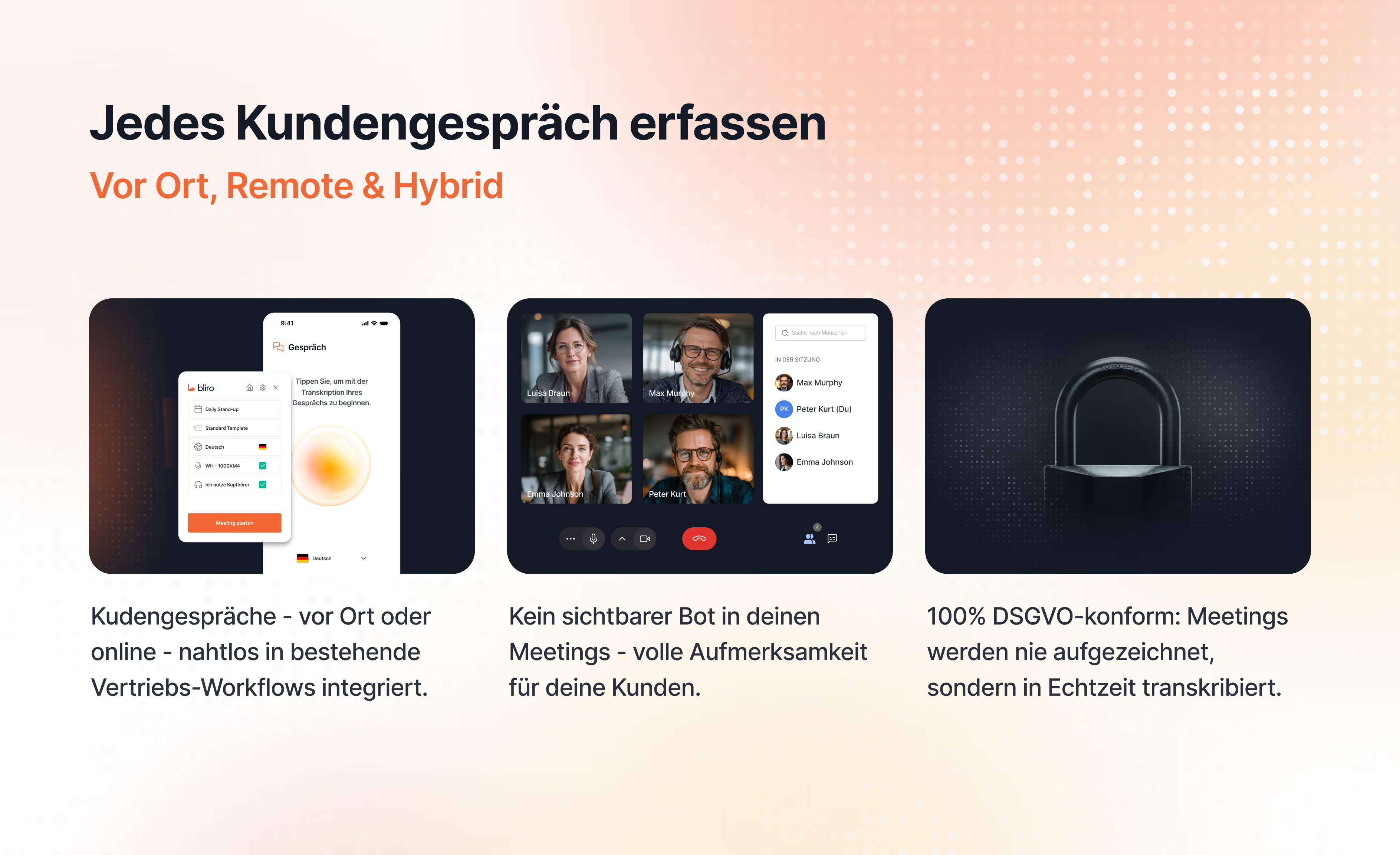
Bliro solves this problem with proprietary technology that does not create audio or video recordings. Bliro real-time transcription converts speech directly into text without creating a recording. No visible bot joins the meeting, no audio is stored on servers. This removes the obligation of active consent of the interlocutors. Bliro is ISO 27001 certified, is regularly audited by Kertos and hosts all data on EU servers.
In German-language sales, English-optimized AI meeting tools meet more complex grammar, regional dialects and strict data protection requirements. A study by the University of Stuttgart shows that even leading ASR models do significantly worse with Bavarian, Franconian or Alemannic than with standard German. What is specifically important when choosing tools in DACH sales is checked by our 5-point checklist for AI meeting tools in the DACH region.
From transcription to CRM update: This is how Bliro works in everyday sales
Bliro at a glance:
- Category: AI Sales Assistant/Conversation Intelligence
- Range of use: Online meetings and on-site discussions
- platforms: Windows, Mac, iOS (iPhone/iPad)
- CRM integrations: Salesforce, HubSpot, SAP, Dynamics 365
- Data protection: ISO 27001, GDPR compliant, no audio/video recordings, EU server
- User rating: 4.8 (OMR Reviews)
The Bliro KI Sales Assistant covers the entire workflow from call recording to CRM updates. In essence, Bliro's AI-supported conversation documentation works in three steps:
In addition, the Bliro KI Sales Assistant offers meeting preparation (automatic appointment briefings), AI sales coaching (anonymous coaching from your own playbooks) and a voice-based assistant that can be stored as a telephone contact in the mobile phone. The Ask Bliro (meeting query) function allows you to search past conversations specifically and retrieve insights in real time.
Bliro integrates into the existing tool landscape of sales teams: Salesforce, HubSpot, Microsoft Dynamics 365, SAP, Google Calendar, Microsoft Outlook, Slack and Confluence. The CRM integration works at the field level and writes information directly into the correct CRM fields, including custom objects. This makes manual copy-paste work unnecessary after every appointment.
In addition to transcription and CRM synchronization, advanced conversation intelligence platforms include other features that change everyday sales life: sales coaching, automatic meeting preparation, follow-up generation, and multi-platform support. We classify the ten features that make the difference when choosing an AI meeting tool for B2B teams in Feature guide for AI meeting tools 2026 one.
Salespeople save an average of eight hours per week on manual admin work with the AI Sales Assistant. Bliro customers report a tenfold increase in CRM usage. Regardless, industry data confirm the effect: Companies that use conversation intelligence tools are loudly achieving Verified Market Reports an average of 30 percent more sales productivity.
Why Bliro can do more than classic AI meeting tools
Most conversation intelligence tools only work in online meetings. Bliro is the only AI sales assistant that covers both online meetings and on-site calls. In a independent practical test by the German Institute for Sales Competence Bliro is highlighted as an AI meeting assistant who can also transcribe on-site conversations and stores them on European servers in compliance with GDPR.
For B2B sales representatives, this means that you document the customer appointment on site just as automatically as the Zoom meeting in the afternoon. The Bliro Notes on-site function runs on an iPhone, iPad or laptop. No separate app, no visible recording device, no unpleasant explanations from the customer.
In everyday hybrid sales, teams switch between zoom calls in the morning and personal customer appointments in the afternoon. Anyone who uses a separate tool for each type of conversation risks breaks in CRM data quality and double maintenance costs. Our shows how six AI meeting assistants do when documenting online and on-site conversations Comparing online meeting notes versus on-site documentation.
On the review platform OMR Reviews Bliro is listed with a rating of 4.8. More than 1,500 companies are already using the AI Sales Assistant for their conversation documentation, including reference customers such as igus, Productsup and ATOSS. Verified users on G2 report that Bliro allows them to fully concentrate on the customer conversation, while notes and follow-ups are created automatically.
The measurable results confirm the trend in the industry. According to Conversation intelligence guide from Cirrus Insight Organizations report up to 20 percent higher completion rates following the introduction of CI tools based on their sales playbooks. According to the manufacturer, Bliro customers report 22 percent higher conversion rates and 11 percent more order volume.
Bot-free AI meeting assistants work via system audio or a local audio driver and never join the meeting as a visible participant. This architecture not only reduces compliance risk, but also enables on-site calls to be documented. Our show which five bot-free solutions are relevant for B2B teams in 2026 and how they differ Comparing bot-free AI meeting assistants.
Our Conclusion
AI-based conversation documentation is no longer a topic of the future. Sales teams in the DACH region lose hours of manual rework every week, while the technology has long since matured. The decisive factor for use in B2B sales representatives is data protection: Only tools that work without recordings can be used within the German legal framework without the requirement of consent.
Internal acceptance is also a success factor. The works council has loudly betriebsrat.de a right of participation in the use of AI meeting assistants in accordance with Section 87 (1) No. 6 BetrVG. Transparent communication and clear rules that position documentation as a working aid and not as a control tool are the basis for successful implementation.
Bliro combines AI-based conversation documentation with GDPR compliance and is the only AI sales assistant online and on site. The platform integrates with Salesforce, HubSpot, SAP and Dynamics 365 and, in addition to automatic documentation, also offers sales coaching and meeting preparation. If you want to leave manual documentation behind and gain more time for the customer, you are welcome to use a Book a demo.
Frequently asked questions about AI-supported conversation documentation in B2B field sales
What is AI-supported conversation documentation in sales?
AI-powered conversation documentation (conversation intelligence) automatically converts customer conversations into structured notes, summaries, and CRM records. In contrast to simple transcription, Conversation Intelligence extracts action-relevant information such as customer needs, deal signals and next steps. Bliro offers this feature for online meetings and on-site appointments alike.
Is AI-supported conversation documentation GDPR-compliant?
GDPR compliance depends on the tool used. According to the data protection conference, recording calls requires the active consent of all participants in accordance with Art. 6 para. 1 lit. a GDPR. Bliro works around this issue by not making audio or video recordings. Bliro real-time transcription processes speech directly into text, without recording. Bliro is ISO 27001 certified and hosts data exclusively on EU servers.
Does AI conversation documentation also work for on-site appointments in the field?
Bliro is the only AI sales assistant that documents both online meetings and on-site conversations. Bliro's Notes Onsite feature runs on iPhone, iPad and laptop. No visible bot, no recording device. An independent practical test by the German Institute for Sales Competence confirms this on-site capability as a unique selling point compared to US-based competitors.
How much time does AI-based conversation documentation really save in sales?
According to Bliro, salespeople save an average of eight hours a week on manual admin work. Industry data supports this scale: The Salesforce State of Sales Report 2024 estimates the admin share in sales at 71 percent of working time. An evaluation of LinkedIn and HubSpot data shows that 64 percent of sales reps save one to five hours a week through AI automation.
Aren't AI meeting assistants simply monitoring tools?
Bliro is explicitly opposed to surveillance. The AI sales coaching at Bliro is anonymous and is based on the company's own playbooks, not on individual performance monitoring. The works council has loudly betriebsrat.de It is true that there is a right of participation in the use of AI meeting assistants in accordance with Section 87 (1) No. 6 BetrVG. However, transparent regulations and a functioning rights concept ensure that AI documentation is perceived as a working aid and not as a control tool.