
Sales coaching works: Gartner confirms up to 8% Increased performance with professional implementation. Companies with structured coaching programs achieve 28% higher win rates than competitors. The figures are convincing.
But classic coaching methods are reaching their limits. Large amounts of time and subjective evaluations slow down B2B sales teams. At the same time, the well-being of a third of all sales employees is deteriorating - a warning sign of outdated support systems.
AI-supported sales coaching offers the way out here. Automatic conversation analysis evaluates sales calls and creates personalized recommendations for action. The successes speak for themselves: 34% faster employee onboarding, 15% shorter sales cycles, efficiency gains of up to $2.6 million per year.
In this practical guide, learn how to use AI-based conversation analysis to continuously improve your sales team - without spending additional time on classic coaching.
Why classic sales coaching is reaching its limits
Classic sales coaching follows a proven approach: Experienced coaches accompany sales staff, provide feedback and promote development. But this traditional model is under growing pressure.
Time and scalability slow down teams
Time is becoming a critical bottleneck in traditional sales coaching. Coaches invest hours in individual discussions and training - resources that are lacking for strategic tasks. This challenge strengthens with every new team member.
The basic problem: Coaches exchange their time directly for consulting services. This limit limits both coach flexibility and team development. Even with an annual turnover of €900,000, this structural limitation remains in place.
Teams experience a typical dilemma between acquisition and core business. Concentrating on sales costs coaching capacity, while focusing on coaching execution neglects sales. Growing teams inevitably lead to quality losses.
Subjectivity makes objective evaluation difficult
Traditional coaching methods suffer from inherent subjectivity. Feedback and evaluations depend on personal coach experiences and generate inconsistent, sometimes unfair assessments.
The difference between training and coaching illustrates the problem:
- Training: unique event, knowledge-focused, group-oriented, short-term effect
- Coaching: Continuous process, focused on behavior and implementation, individual and situational, sustainable behavior change
Many companies lack methodological coaching knowledge. Leaders without their own coaching experience have no role models. Appropriate tools and structures for effective coaching implementation are often not available. Administrative tasks displace valuable development discussions and waste potential.
B2B sales are becoming more complex and demanding
At the same time, requirements are constantly increasing. 61% in 2023, salespeople found selling more challenging than five years earlier. The causes are complex.
B2B buyers are becoming more selective and research more thoroughly before making purchase decisions. Economic uncertainties prolong decision-making processes - prospects postpone or reconsider purchases more frequently.
Modern companies use complex tool landscapes: sales intelligence, marketing automation, prospecting software. This diversity overwhelms traditional coaching approaches without data-based analysis skills.
Customers expect more individual solutions and tailored service with accurate real-time data and recommendations. Traditional methods have clear limits here.
These challenges make it clear: AI-based conversation analyses such as Bliro offer practicable alternatives. While classic coaching is reaching its limits, data-based coaching opens up new paths for effective sales team support.
AI is changing sales coaching: Data-based conversation analysis for better results
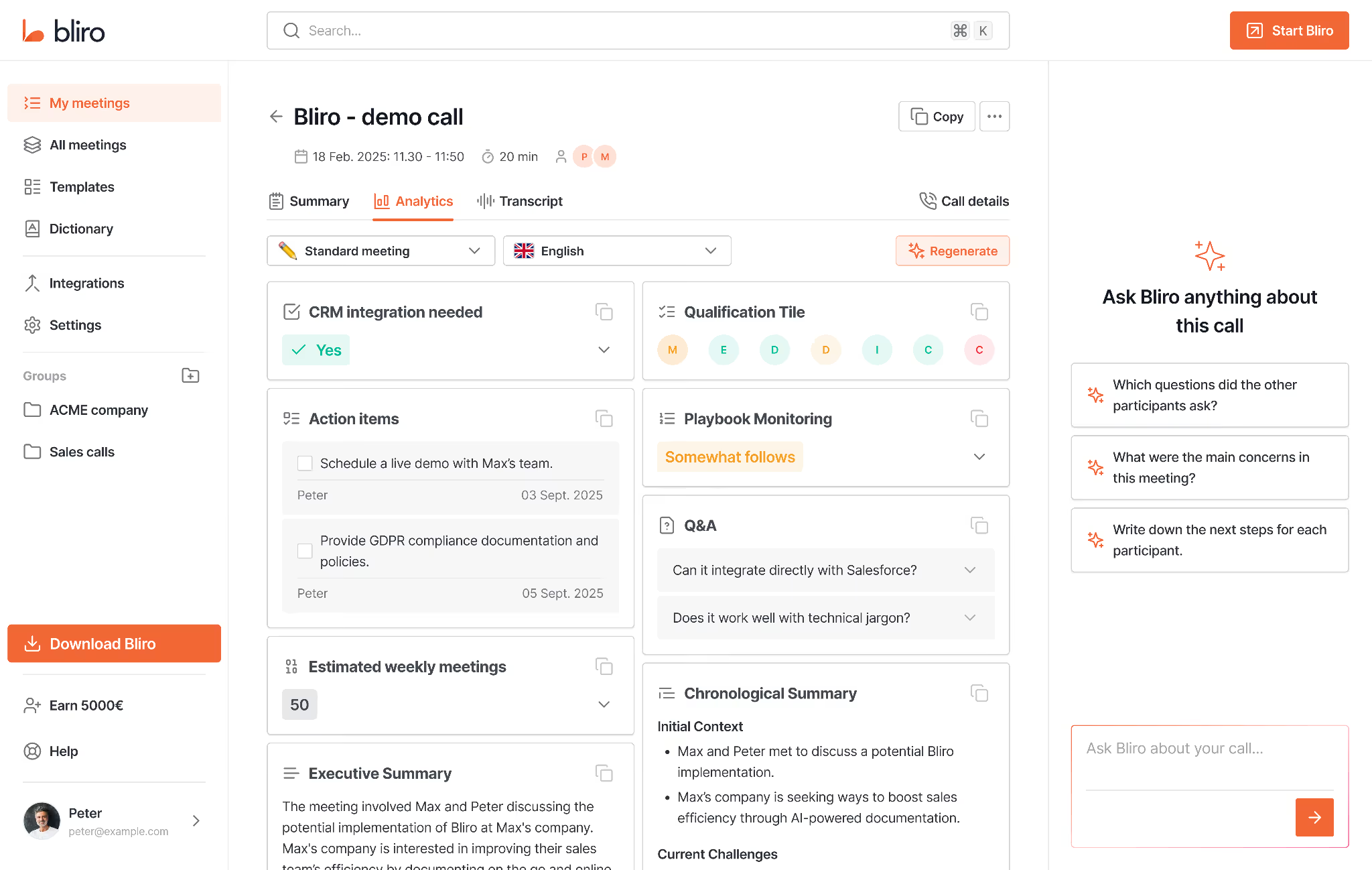
Sales coaching is becoming digital. AI-powered technologies are fundamentally changing how sales teams learn, evolve, and close deals.
AI-supported sales coaching: Definition and how it works
AI-supported sales coaching provides salespeople with personalized real-time instructions and gives managers precise coaching data. Sales calls are automatically analyzed and converted into actionable insights.
Platforms such as Bliro transform sales interactions into concrete recommendations for action. Risks are identified, trends are identified, follow-up activities are generated automatically - the CRM system is updated in parallel. Calls are transcribed live, summaries are created automatically, and contact processing is accelerated.
Conversation Intelligence is at the heart of this approach. Sales processes are consistently structured, inputs are evaluated live, and immediate discussion improvements are recommended. Salespeople collect valuable information without losing focus on the customer.
Benefits of data-based conversation analysis
Systematic sales pitch analysis offers measurable benefits:
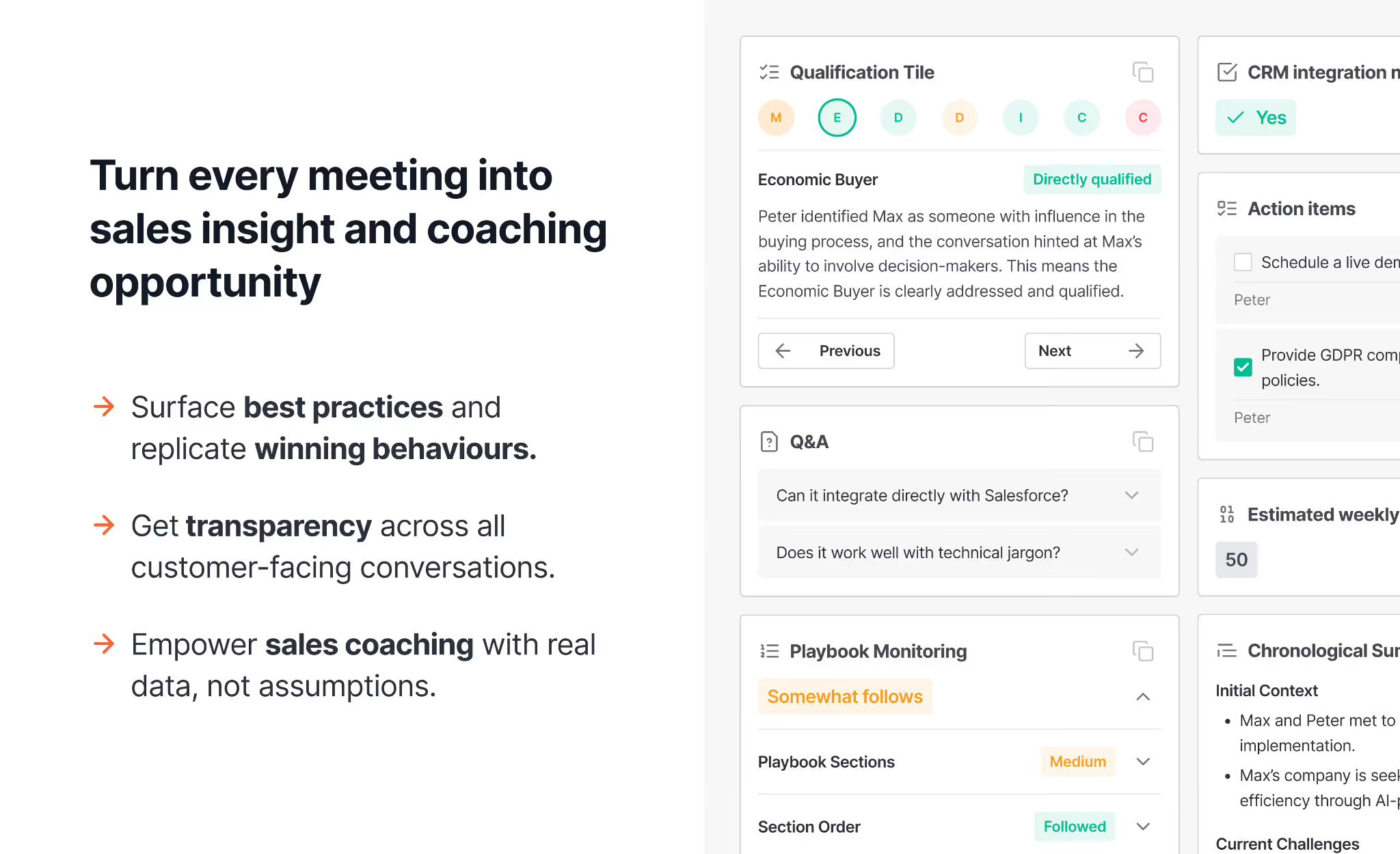
- Identify successful patterns: AI recognizes the most effective strategies and recommends team-wide best practices
- Objective performance evaluation: data-based feedback on speech percentage, response time, convincing language instead of subjective assessments
- Unlimited scaling: coach thousands of employees at the same time - regardless of team size or location
- Customization: Learning paths are tailored to each salesperson's specific strengths, weaknesses, and needs
Achieve teams with AI-powered sales coaching to 57% higher success rates than competitors. AI tools improve completion rates by up to 30% and reduce training times for new employees by 50%.
Bliro uses these opportunities through sales interaction analysis and continuous AI coaching features. Sales managers evaluate meetings precisely, ask specific questions about team discussions, and uncover blockages or performance issues.
Differences to classic coaching
AI-powered coaching provides data-based insights from big data sets instead of subjective, inconsistent traditional methods. While classic coaching is based on sporadic sessions and general advice, AI coaching provides real-time behavioral insights for individual strengths and weaknesses.
Cost benefits are significant: AI coaching costs up to 80% less per salesperson than traditional methods. Performance measurement is becoming more precise - instead of just tracking quotas, behavioral changes and their direct sales effects are observed live.
AI works around the clock, never gets tired and meets users without prejudice. Studies show that people often trust AI more than human coaches - less fear of evaluation or indiscretion.
The human component remains essential. Successful companies rely on hybrid approaches: coaches as sources of inspiration and support, AI as training partners on call. This combination makes platforms like Bliro valuable — technological innovation meets psychological findings for more effective personnel development.

AI conversation analysis: How to automatically evaluate sales calls
Sales dashboard displayed on laptop and mobile with key metrics, interactive charts, AI recommendations, and mobile optimization.
Every sales call contains valuable information. AI-based analysis makes this data usable and converts it into concrete recommendations for action for your sales team.
Automatic pattern recognition in customer conversations
AI systems automatically transcribe sales calls and identify important signal words, objections, and emotional cues. The system recognizes successful conversation patterns: Which formulations lead to transactions more frequently? Which order of argument generates more interest?
Particularly valuable: AI discovers connections that people overlook. Certain product declarations increase 23% completion rate in early phases of conversation, but are counterproductive in later stages.
Instant feedback for sales reps
AI-supported coaching provides support during the ongoing conversation. Discreet information appears only visible to the seller. For example, Bliro shows recommendations such as “Ask an open question now” or “Respond to the objection.”
Salespeople can react immediately and make conversations more successful. The result: shorter sales cycles and up to 20% higher Completion rate.
Individual learning paths after every conversation
At the end of the call, the AI creates detailed analyses with personalized development recommendations. Basis for individual learning paths:
- Identified weaknesses (too little active listening, frequent interruptions)
- Common sales frameworks such as MEDDIC
- Industry-specific benchmarks
Data-based feedback is more precise than subjective assessments. Sales managers receive prepared data for targeted coaching sessions.
Practical example: Bliro's conversation analysis
Bliro analyses linguistic elements and conversation structure at the same time. The system automatically recognizes important moments: needs assessment, complaint handling, completion phases.
Customer signals are immediately identified. If a customer signals interest in buying, Bliro recommends the next sales step. If there are signs of risk, sales staff can take action at an early stage.
Implementing AI coaching successfully in a team: 4 proven steps
AI coaching can be seamlessly integrated into existing sales processes. The right implementation strategy is crucial. Here you can find out how to successfully transition your team to AI-based coaching.
Step 1: Systematically analyze existing sales processes
Start with a thorough inventory. Document your current work processes and identify areas with Automation potential. The successful integration follows this proven roadmap:
- Analyze current sales processes
- Identify areas for AI support
- Select suitable AI tools
- Train teams and promote acceptance
- Step-by-step implementation with performance measurement
Important: Employees who see AI as a partner rather than as a threat use the technology much more effectively. Open communication about concrete benefits creates the necessary acceptance.
Step 2: Establish seamless CRM integration
AI coaching develops its full potential by linking with existing systems. CRM integration plays a key role in this. Bliro, for example, analyses customer conversations and transfers insights directly to your CRM system.
This networking creates a integrated customer image for sales, service and marketing. Behavioral patterns are automatically converted into concrete recommendations for action. Prerequisite for reliable AI results: clean data, clear measurement frameworks and defined KPIs.
Step 3: Use real sales conversations as a basis for learning
AI coaching analyses real customer conversations - either in real time or retrospectively. This approach surpasses artificial role-playing games: authentic learning environment, feedback from real sales situations.
Tools like Bliro recognize conversation patterns, typical objections, and success factors during customer meetings. Data-based feedback on conversation structure, reasoning quality and empathic behavior — precisely where it counts.
Step 4: Sales leader as AI coaching champions
The human component remains essential. Sales leaders use AI findings for targeted coaching: objective evaluation principles, efficient allocation of resources, precise interventions.
Successful sales managers exemplify continuous learning. They understand changing buyer behavior, correctly evaluate AI support, and help their team learn new Tools and customer engagement methods.

Measuring success in AI coaching: These metrics show real improvements
Real coaching success requires measurable results. Many companies fail to prove the effect of their coaching measures. AI-supported sales coaching offers the decisive advantage here: precise key figures that make progress visible.
The most important KPIs for your sales coaching
Successful performance measurement uses two KPI-Categories: Lagging indicators (result KPIs) such as turnover or completion rate measure past performance. Leading indicators (behavioral KPIs) show which activities lead to success.
These coaching metrics provide real insights:
- Conversation quality indicators: percentage of speech between seller and customer, open questions per conversation, objection rate
- Pipeline metrics: lead-to-opportunity conversion, completion rate, average order value
- Efficiency indicators: sales cycle length, ramp-up time of new employees
Behavioral changes instead of just sales figures
Real coaching work is reflected in changing behavior, not just in turnover. Successful teams combine quantitative and qualitative metrics. Structured performance measurement demonstrably increases team effectiveness.
Measure these behavioral improvements specifically:
- Better communication and conflict management
- More qualified conversations with a clear Next Step
- Higher efficiency and self-effectiveness of employees
Bliro's support in measuring success
Bliro's platform automatically analyses customer conversations and identifies sales growth factors - the basis for sustainable sales optimization. The system recognizes successful sales patterns and applies specific frameworks to discussions with various customers.
Modern companies use AI to measure success more precisely. Bliro offers complete transparency: All customer conversations are transcribed, analyzed and translated into actionable insights.
The result: measurable ROI of coaching activities and targeted identification of potential for improvement. Data-based optimization replaces subjective assessments.
Conclusion
AI-supported sales coaching dwarfs traditional methods. Where traditional approaches fail due to time and scale limits, data-based conversation analysis creates measurable improvements for every team member.
The success story is self-explanatory: more precise training, more efficient financial statements, sustainable performance improvements. These results are obtained through systematic evaluation of real customer discussions and individual recommendations for action.
However, technology alone is not enough. Successful teams combine AI analytics with human expertise. This connection makes optimal use of data-based precision and personal coaching.
Bliro makes this step possible today. Automatic conversation pattern recognition, live feedback, and seamless CRM integration create a continuous improvement cycle for your team.
The decision is up to you: continue as before or take advantage of AI-supported coaching. Teams with intelligent support overtake their competition with significantly less effort.
Start implementing now. Define your key performance indicators, link AI tools with existing systems and establish a learning culture within the team. AI-powered conversation analysis will not only improve your sales results - it will fundamentally change the way your entire team works.